

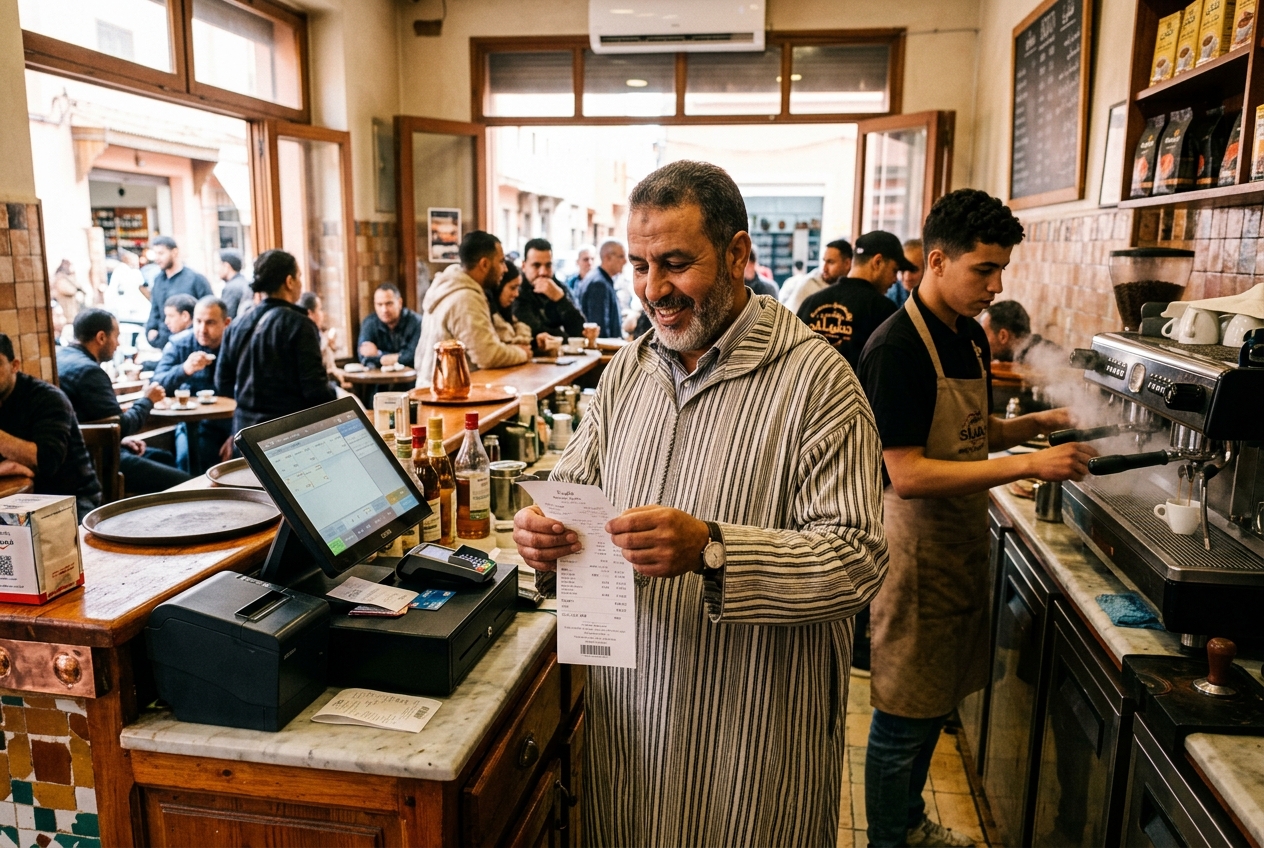
Your SaaS subscription won’t let you add the payment types your cashiers actually take, and support can’t explain why Arabic receipts print backwards. You’re following rules set in another country, not your own business.
That mismatch gets louder as your operation grows, until the software that once saved you time now gets in the way of how you work.
Local Practices Don’t Fit SaaS Defaults
Most SaaS platforms are built around standards from larger markets—often Europe or North America. When you try to run Moroccan processes, from cash-heavy trade to Darija-speaking staff, you’re forced into awkward workarounds. Arabic printing breaks, local ID checks aren’t built in, and even a simple supplier invoice can take twice as long to enter. Over time, these compromises pile up across the day’s tasks.
If your team retypes receipts by hand because the system won’t print Arabic, or has to manage deposits outside the app because there’s no built-in way to record a CIN, you’re not alone. Many operators in Morocco find foreign SaaS tools simply can’t be adapted to local workflow without manual fixes.
Integration Gaps Stall Your Growth
You rely on multiple tools—POS, inventory, and payroll—but SaaS subscriptions rarely talk to each other unless they were built for the same ecosystem. Local operators often need to link systems that handle MAD, track CINs, or support cash payouts. Without integration, you face duplicate data entry and mismatched records, all while trying to scale. Every system you add grows the pain of keeping them in sync.
When your POS doesn’t send real-time sales to inventory, your staff might run out of stock without warning. If payroll tools can’t track daily cash sales, you’re left exporting spreadsheets and reconciling numbers by hand. As you open new locations, these gaps only widen and slow down decision-making.
Real Security and Compliance Needs
Moroccan businesses operate under their own set of data rules—identity checks, cash handling, and reporting requirements that most foreign SaaS vendors don’t serve. Custom software gives you control over how data is stored, processed, and reported, making audits and compliance simpler. When you run your own stack, you can also ensure data is kept within the country, a growing concern for regulated industries.
If you’re asked to provide customer contracts or ID records during a CIN check and your SaaS can’t export them in the right format, you’re left scrambling. With a custom solution, you can build reports and exports tailored to Moroccan regulators, reducing risk and saving hours during inspections.
Costs Spiral as You Scale
SaaS pricing is often per user, per location, or tied to extra features. As you grow, you watch your subscription bill creep up, with little influence over what you’re actually paying for. Custom software changes that equation: you invest up front, but your costs stay predictable as you add users or branches. This is especially true for operators with high staff turnover or seasonal demand.
If you’ve hesitated to add new cashiers or open a pop-up location because each extra user means a fresh subscription fee, you’re feeling this pain directly. With custom software, you decide who gets access and when, without renegotiating your costs every time your team changes.
When Real-Time Local Support Matters
Getting support in Darija or French, from a team that understands Moroccan infrastructure and business hours, is rare with global SaaS platforms. When issues strike—connectivity drops, hardware fails, or you need training for new staff—custom solutions built and supported locally mean you’re not waiting for a ticket to be escalated across time zones. On-site installation and training are part of the package, not an add-on.
If you’ve ever tried to explain a POS printer issue over email to a support team on another continent, you know the frustration. With a local provider, issues are resolved in person, in your language, and with an understanding of your real working environment.
Matching Features to Real-World Processes
When you build custom software, you define the process: how cash is handled, how deposits are tracked, how contracts are created, and even what languages your staff use. Features like WhatsApp agents, shared blacklists for fraud, and digital check-ins become possible because you’re not limited by what a global SaaS tool thinks is “standard”. The result is software that fits your business, not the other way around.
If your car rental workflow requires scanning a CIN, sending contracts over WhatsApp, and integrating real-time GPS tracking, off-the-shelf tools can’t deliver it all. Custom-built platforms like Elaicar exist because generic solutions never matched these realities—so the process was re-engineered from the ground up.
The takeaway
When SaaS stops working for your daily reality, custom software puts you back in control.
See What Custom Software Can Solve
Talk to Elaitech about building a system that fits your business the way you actually run it.
Book a call